 Skip to content


Why Our Grandparents Preferred Brass Utensils for Daily Use
- by monorex Monorex
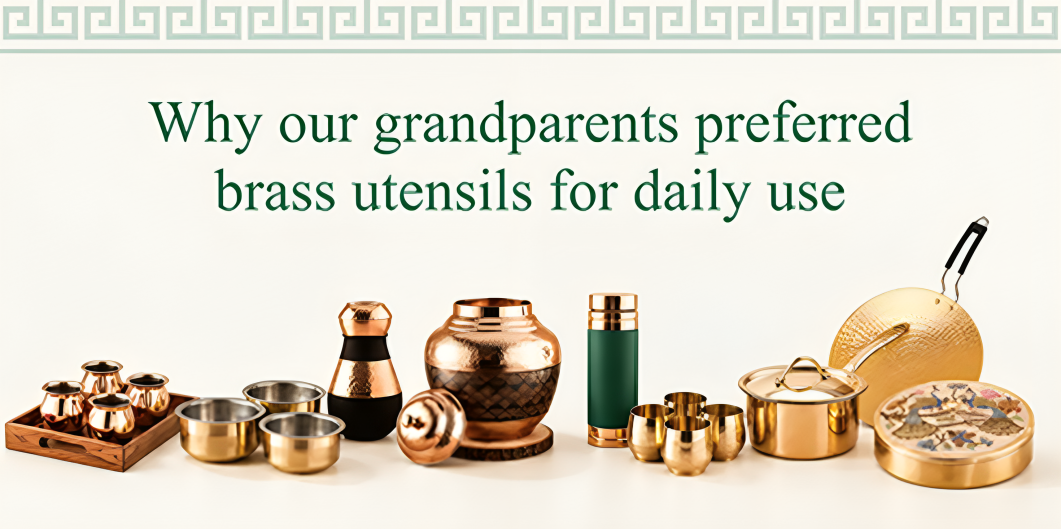
If you have ever visited an older family home or helped clean out a grandmother’s kitchen, you probably came across heavy, shining brass vessels. They took up serious shelf space, looked beautiful, and seemed to last forever.
Before Teflon pans, lightweight aluminum pots, and cheap plastic bowls took over modern kitchens, brass—or Pittal—was what everyone used every single day.
Our grandparents didn't keep these heavy pots around just out of habit or tradition. They stuck with brass because it actually made sense. It kept family members healthier, made simple meals taste better, and held up through decades of daily cooking.
With so many people growing tired of chemical coatings peeling off their modern cookware, brass is making a big comeback. Here is a look at why earlier generations swore by it, and why making room for it in your kitchen today is still a smart move.
1. Good Health Cooked Right Into the Food
Long before people started taking daily vitamin supplements, our ancestors got essential trace elements straight from their dinner plates.
Brass is made by combining two key metals: copper and zinc.
-
Copper is well-known in traditional wellness routines for its natural ability to fight off harmful bacteria, keep digestion moving smoothly, and cut down on internal inflammation.
-
Zinc is an essential mineral that keeps your immune system strong, helps your body repair itself, and supports healthy skin.
When you cook hot food or store dry grains in solid brass cookware, tiny amounts of these natural metals slowly blend into your meal. Serving your family in a handcrafted monorex brassware dinner set isn't just about presenting a stunning table—it’s a simple, natural way to add extra goodness to every meal.
2. No Burn Spots, Just Even Heat
Anyone who has tried making a slow-simmered dal or a batch of kheer in a cheap, thin pot knows the struggle: the bottom burns before the food is even done.
Brass behaves very differently on the stove. It is a dense metal that holds onto heat and spreads it out evenly across the entire surface of the pan.
That gives you two massive advantages in the kitchen:
-
Fewer Lost Nutrients: High, harsh temperatures break down delicate vitamins in fresh vegetables and lentils. Slow, gentle cooking in brass keeps those natural nutrients intact.
-
Warm Meals Without Re-heating: Brass holds its temperature for a long time. Once you turn off the gas stove, your food stays hot inside the pot, saving you gas and keeping you from having to reheat meals over and over.
3. The Smart Trick Behind Safe Brass Cooking (Kalai)
A common question people ask today is: Won't acidic food react badly with brass?
Our grandparents knew the answer to that long ago. They worked around it using an old-school technique called Kalai, which means lining the inside of a brass pot with a thin layer of pure tin.
-
Uncoated Brass: Perfect for drinking water storage, boiling fresh milk, kneading dough, or storing dry grains.
-
Tin-Lined (Kalai) Brass: Ideal for spicy dals, tomato gravies, curds, and everyday stove cooking.
For curries, tomatoes, or anything with salt and spice, choosing tin-lined pieces from the monorex cookware collection gives you the heating benefits of heavy brass while keeping your food completely safe and non-reactive.
Unlike modern non-stick coatings that chip off into your food after a few months, traditional tin-lining is non-toxic and can easily be re-applied whenever it wears down over time.
4. Spices Just Taste Better
Ask anyone who remembers eating food straight out of an old-fashioned brass kadai: the flavor is just different.
Because brass heats slowly, spices don't scorch or turn bitter instantly when they hit the pan. Their natural aromatic oils release gently into the oil or ghee, giving curries and lentils a rich, rounded flavor that is hard to copy with modern cookware.
5. Buy It Once, Use It for Life
Most modern non-stick frying pans are built to be thrown away. After two or three years of daily scraping, the black coating flakes off, and the pan goes straight into the trash.
Brass cookware is the exact opposite—it is practically indestructible.
In most traditional homes, brass cookware was handed down as a wedding gift or family keepsake. It lasted through decades of heavy use without warping or cracking. Investing in pieces from monorex means buying real kitchenware that lasts long enough to become an heirloom rather than landfill waste.
Easy Ways to Bring Brass Back into Your Daily Routine
You don't need to throw out everything in your kitchen cabinet overnight to see the difference. Start small with simple swaps:
-
Keep Water in Brass: Keep a brass pitcher or jug on your dining table for drinking water throughout the day.
-
Switch Your Cooking Pot: Use a tin-lined brass kadai for your everyday dals, vegetable stir-fries, and curries.
-
Upgrade Dinner Presentation: Bring out authentic monorex traditional brassware when serving family and guests for a timeless, grounding dining feel.
Common Questions About Brass Kitchenware
Is it safe to eat from brass plates every day?
Yes, absolutely. Eating off clean brass plates is completely safe and lets you absorb helpful trace amounts of copper and zinc with your daily meals.
What is the best way to clean brass utensils naturally?
Skip the harsh chemical detergents. A quick scrub with tamarind pulp, a slice of lemon rubbed with salt, or traditional Pitambari powder will cut right through tarnish and bring back that warm gold shine instantly.
How often do you need to redo the tin-lining (Kalai)?
If you use the pot every day for cooking curries, the tin coating usually lasts about 6 to 12 months. When you start seeing the golden color of the brass showing through the silver inner lining, it is time to take it for a quick re-coating.
Final Thoughts
Our grandparents didn't use brass out of nostalgia; they used it because it worked better, lasted longer, and looked after their health. Bringing brass back into your home connects you to those same simple, reliable benefits every time you step into the kitchen.
Explore the complete handcrafted range of pure brass cookware, dinnerware, and kitchen essentials at monorex.