 Skip to content


Brass Utensils in Ayurveda: Why Modern Kitchens Are Returning to Their Golden Roots
- by monorex Monorex
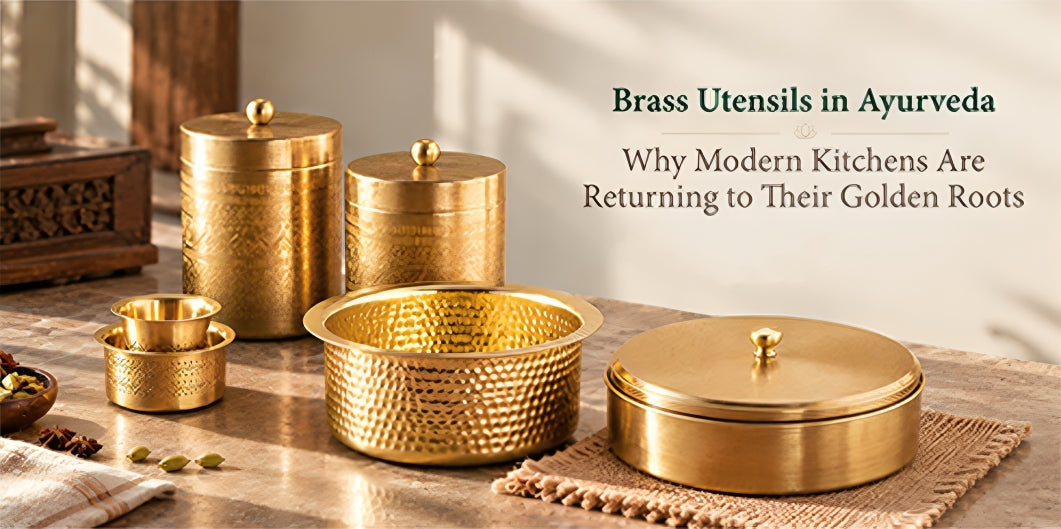
Walk into almost any urban kitchen today, and you will see shelves lined with shiny stainless steel, black non-stick Teflon, or clear tempered glass. But cast your memory back to your grandparents’ home, and a completely different visual unfolds: heavy, golden-toned cookware gleaming under warm lighting, radiating a feeling of timeless comfort.
At the center of that traditional kitchen was brass—known as Pittam in ancient Sanskrit literature.
Over the last few decades, fast-paced lifestyles made us choose convenient, low-maintenance materials. Traditional metals were quietly moved to hidden corner cupboards. But as wellness movements take center stage globally, home cooks, health advocates, and professional chefs are taking a serious second look at old-world wisdom.
Ayurveda never stopped recommending brass. Today, nutritional science is validating what ancient healers knew all along. Cooking and dining in brass is not just an aesthetic throwback—it is a functional daily practice for holistic living.
What Makes Brass Unique in Ayurvedic Philosophy?
In holistic Indian medicine, vibrant physical health relies on balancing the three fundamental biological energies, or Doshas: Vata (air/space), Pitta (fire/water), and Kapha (earth/water). The materials you use to store, prepare, and serve your food directly affect its metabolic energy (Prana) and nutrient structure.
Brass is a physical alloy made primarily of 63% copper and 37% zinc. When blended, these two elements create a distinct energetic synergy:
-
Pitta Cooling: Brass helps balance excessive internal body heat, encouraging smooth digestion and calm metabolic activity.
-
Vata Grounding: The solid weight and even thermal properties of brass provide a stabilizing energy to daily meals.
-
Trace Nutrient Transfer: Microscopic amounts of essential minerals slowly dissolve into food during preparation, offering pure bioavailable nutrition.
If you want to bring these traditional advantages into your modern cooking routine, you can explore our handcrafted brass collection designed specifically for contemporary homes.
5 Science-Backed Health Benefits of Cooking and Dining in Brass

1. Daily Immune System Support
Zinc plays a critical role in building a responsive immune system, while copper assists in oxygen transport, collagen synthesis, and iron absorption. Preparing food in brass provides a gentle, consistent supply of these vital dietary minerals without relying entirely on synthetic supplements.
2. Exceptional Heat and Nutrient Retention
High-heat cooking on uneven metals like thin stainless steel or aluminum often destroys heat-sensitive vitamins. Brass distributes heat smoothly and evenly across its surface. This slow, uniform heating preserves up to 85% of natural nutrients within your ingredients.
3. Kindles the Digestive Fire (Agni)
In Ayurvedic texts, eating from brass plates actively stimulates Agni—your internal metabolic fire. This heightened state of digestion ensures efficient nutrient breakdown, reduces post-meal sluggishness, and minimizes bloating.
4. Natural Antimicrobial Cleanliness
Brass possesses inherent oligodynamic qualities. This scientific property means that contact with brass naturally destroys harmful microorganisms, molds, and bacteria. Storing drinking water in brass vessels purifies the water safely without stripping away healthy essential minerals.
Experience this natural purification routine firsthand by adding our pure brass drinkware line to your work desk or dining space.
The Essential Rule of Cooking in Brass: Understanding "Kalai" (Tin Lining)
To get the best out of brass without compromising food safety, Ayurveda offers one critical guideline: never cook strongly acidic ingredients in unlined brass.
Sour substances like tomatoes, tamarind, yogurt, lemon juice, and vinegar react with raw copper and zinc. This reaction can distort flavor profiles and cause unwanted chemical oxidation.
To solve this naturally, master metalworkers developed Kalai—a traditional technique of hand-coating the inner surface of brass utensils with pure tin.

-
Kalai (Tin-Lined) Brass: Safe for every type of cooking, including acidic sauces, spicy gravies, and dairy dishes.
-
Raw (Unlined) Brass: Best suited for dry vegetable stir-fries, rice boiling, water storage, and serving tableware.
Simple Care Instructions for Long-Lasting Brass
Caring for brass cookware does not require harsh chemical cleansers. You can easily keep your metalware gleaming using everyday kitchen ingredients:
-
Make a Natural Paste: Combine equal parts fresh lemon juice with baking soda (or tamarind paste mixed with sea salt).
-
Apply Softly: Rub the paste gently across the metal using a soft cotton cloth or non-abrasive sponge.
-
Rinse and Dry Immediately: Wash with tepid water and wipe completely dry with a microfiber towel to avoid water spots.
Pro-tip: Never use steel wool or abrasive scouring pads, as they can scratch the surface and wear down the protective tin lining faster.
Embracing Conscious Kitchen Culture
Bringing brass back into your kitchen isn't about giving up modern convenience. It is about making intentional choices that reconnect your daily lifestyle with health, craftsmanship, and timeless heritage.
Are you ready to transform your culinary experiences? Explore monorex's authentic metalware store today and discover kitchenware built to nourish generations.